Rome
A Werewolf Thing: A Rejected Mate Werewolf RomanceRome is the Italian homeland of Saphira’s maternal family and the destination that turns a family summons into a confrontation with inheritance, memory, and supernatural danger. It begins as a place associated with Aunt Rose and the relatives of Saphira and Trevor’s late mother, but its significance expands when the family’s traditions, interspecies relationships, medical crisis, prophecy, pregnancy, and reunion all become entangled with the journey there and its aftermath.
Definition and Family Setting
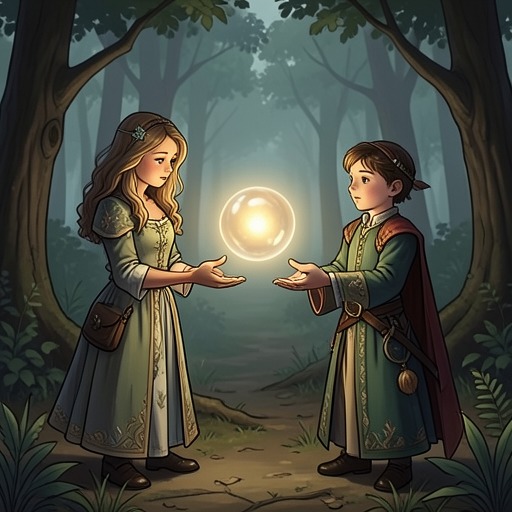
Rome is identified as the home of Aunt Rose and as the origin of Saphira’s mother’s side of the family. When Aunt Rose requests that Saphira and Trevor visit her, Saphira immediately recognizes that the summons requires travel to Rome; the practical obstacle is resolved when Rose sends plane tickets. The invitation includes additional tickets because Saphira and Trevor have already found their mates, allowing Ashton and Carmen to accompany them. Rome therefore functions not merely as a geographical destination but as a family threshold: entering it means bringing the newer bonds of the siblings’ lives into contact with the older maternal lineage.
Saphira’s connection to Rome is also linguistic and cultural. She knows Italian because her mother’s family came from Rome, Italy, and she had to learn the language to communicate with half of her relatives. This detail gives the location a material presence in her identity. Rome is not an unfamiliar foreign setting in the ordinary sense; it is a place inherited through family history, though one that Saphira has experienced at a distance since her mother’s death.
The Journey and Return
The journey to Rome is narrated through the anticipation of reunion. During the flight, Saphira looks out of the plane window while explaining her Italian connection to Ashton. Once the plane arrives, she wonders whether Aunt Rose has come to meet them, and Trevor expects that she probably has. At the airport, Rose appears, greets Ashton as Saphira’s mate, and leads the group toward the exit, explaining that the family is waiting at the village.
Rome’s family setting is unusual because the relatives live in tents rather than conventional houses. Saphira does not understand why they live that way, but accepts it as tradition, treating tradition as something not to be casually challenged. The village thus presents Rome as a homeland organized by inherited custom. Its tents mark a social world distinct from the one Saphira and Trevor have inhabited elsewhere, while the family’s immediate recognition of their arrival suggests that news and kinship travel quickly through the community.
Memory, Mourning, and Belonging
On entering the village, Saphira and Trevor are met by relatives who rush from their tents and embrace them, saying that they have been gone too long. The welcome is affectionate, but it also exposes the distance created by bereavement. Their mother used to bring both children to visit every summer; after her death, many things changed. Saphira had wanted to return, yet had not believed she could emotionally manage the visit.
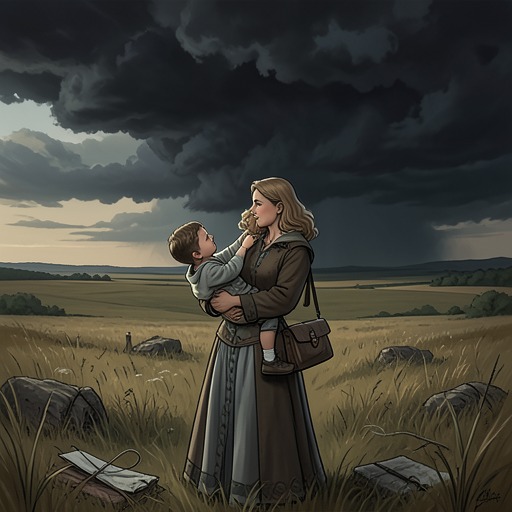
Aunt Rose intensifies the connection between Rome and mourning because she looks exactly like Saphira’s mother. Looking at Rose allows Saphira to see a version of the woman she once had the privilege of calling her mother. Rome consequently operates as a memorial landscape without being reduced to a grave or monument. The village restores physical contact with relatives, but it also reopens the emotional absence at the center of Saphira’s family history. Her return is simultaneously a homecoming and a renewed encounter with loss.
Interspecies Contact and Threat
Rome’s narrative significance grows as the family world becomes a meeting place for different supernatural peoples. Saphira’s protective response to a girl accompanying her father and Simon reveals that the girl is a vampire. Simon immediately adopts a protective stance toward the vampire, and Saphira realizes that the vampire is Simon’s mate. The moment places Rome inside the story’s larger pattern of relationships that cross species boundaries. The city’s family gathering therefore contains both inherited affiliation and an unsettling challenge to older divisions between faeries, werewolves, and vampires.
That tension becomes explicit when screams erupt throughout the village as the Banshees arrive. Banshees and faeries are described as natural foes, and a Banshee’s scream can reach a pitch capable of killing a faery if exposure continues. The village is therefore not a permanently secure refuge. Its boundaries matter: a Banshee can cross them more easily than a faery can cross into Banshee territory, where the shrieks would overpower the faery. Rome’s setting is consequently defined by both communal belonging and the vulnerability created by hostile territorial borders.
Crisis, Care, and Continuing Significance
The events associated with Rome also become connected to bodily danger and collective responsibility. Saphira is struck by a poisoned arrow, and a doctor tells Ashton that the arrow was coated with poison. Later, Trevor is found gravely weakened in a dark storage room, and Saphira must beg Carmen for more than five minutes to be allowed an hour alone with him; Carmen has not slept since Trevor’s arrival and is barely eating. These scenes make the location part of a care network in which protection is expressed through vigilance, medical knowledge, exhaustion, and sometimes disagreement over who may act.
Rome also stands behind the story’s expanding political and prophetic stakes. A prophecy states that a war between vampires and werewolves will occur when the sun is black and stars cross the sky, with the conflict deciding which race will become dominant. Against that future, Saphira’s pregnancy becomes a question of leadership as well as private life. Trevor argues that she cannot lead an army because she is pregnant, while Saphira insists that her half-faery nature will allow her to cast a protective charm upon herself. The conflict shows how family protection can become an attempt to restrict Saphira’s agency, even when it arises from concern for her body and unborn child.
The emotional movement associated with Rome ultimately reaches toward reunion rather than simple safety. After separation and danger, Saphira finds herself moving toward Ashton and throws herself into his arms when they are only a foot apart. He wraps his arms around her carefully, mindful of her stomach, and tells her that he missed her. The gesture binds the location’s major meanings together: Rome is a place of ancestral return, threatened community, cross-species intimacy, medical vulnerability, reproductive consequence, and renewed family attachment. Its importance lies in the way it makes private belonging inseparable from the wider supernatural conflicts that Saphira and those around her must face.